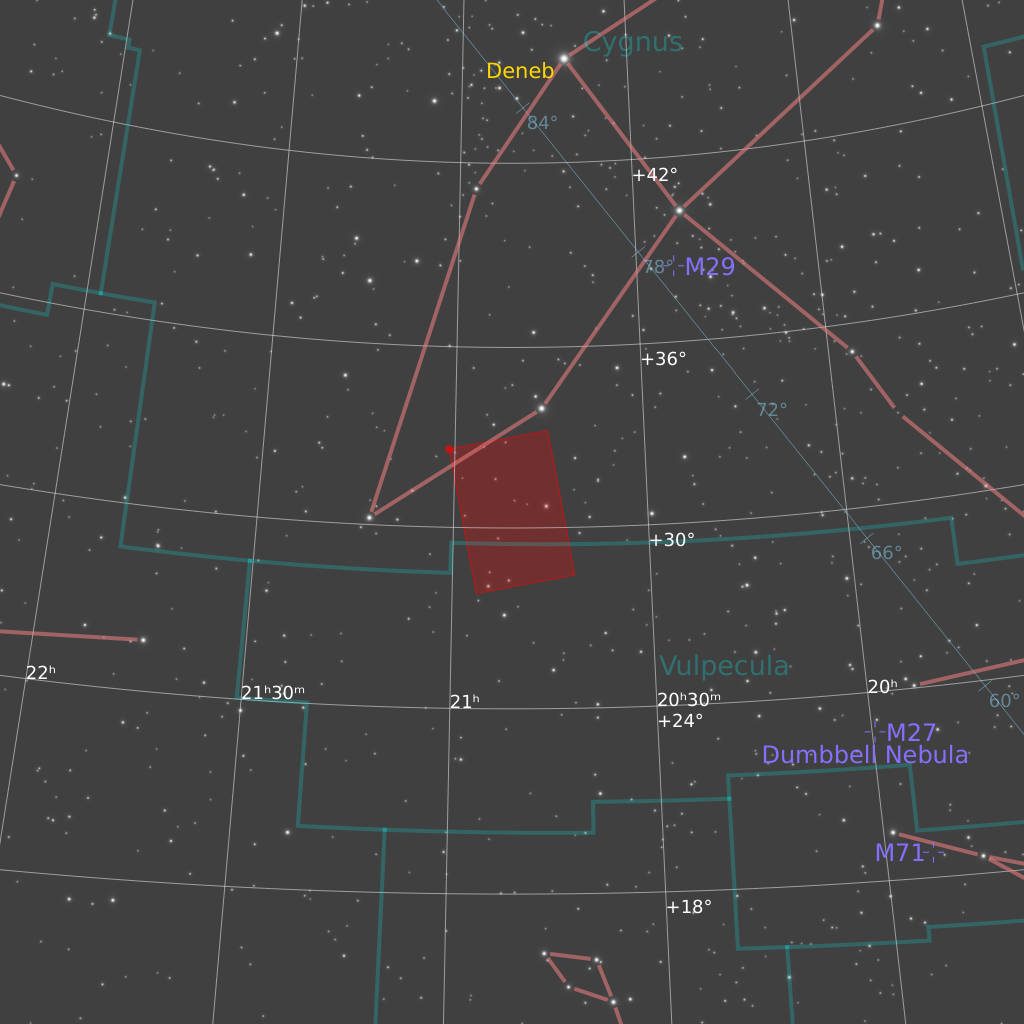
SH2-103, better known as the Veil Nebula complex or the Cygnus Loop, is the remnant of a supernova that exploded in Cygnus somewhere between 10,000 and 20,000 years ago. It is one of the most popular objects in the northern sky and has fascinated me ever since I got into astrophotography, but living in Melbourne makes it impossible to capture the whole thing from home. Thanks to the DSRO crew, Steve Mandel and Bob Fera, I finally had the chance to give it a proper shot (literally) from Starfront Observatories in Texas.
Processing
I had long imagined how I would process this target if I ever had the opportunity: H-alpha in red, OIII in blue and green, and SII in yellow. That kind of mapping usually takes a fair bit of trial and error, but because of the way the emission lines are distributed across the Veil, it came out almost exactly as I wanted straight away. I have used the same approach in a few of my images, most notably on the Vela supernova remnant.
I also captured a decent amount of LRGB. There is quite a lot of dust in this region, but highlighting it strongly took away from the overall image, mostly because the dust has little going on in the fainter parts of the narrowband data (apart from the small dust blob at the bottom right of the frame). I still blended it in, but only to the point where it did not compete with the narrowband.
Equipment
Captured remotely at Starfront Observatories in Texas, under Bortle 1 skies.
Telescope: Takahashi FSQ-106EDX4
Camera: Player One Zeus-M Pro
Mount: Software Bisque Paramount MYT
Filters: Antlia 3nm H-alpha, OIII and SII; Antlia LRGB
Explore the full-resolution image and acquisition details on AstroBin.